


Dolphin watching in Mauritius is one of the island’s most unforgettable wildlife experiences in Mauritius. Found mainly along the island’s west and north-west coasts, these fascinating marine mammals offer a unique encounter, with every outing being different depending on their movements and the conditions of the day.
Before heading out to sea, let’s discover the two dolphin species most commonly seen around Mauritius and the best practices that help protect them.
Which dolphin species can you see in Mauritius?
Two dolphin species are regularly observed around the island.
The Spinner Dolphin (Stenella longirostris) is usually seen in large pods of several dozen individuals. Energetic and playful, they are famous for their spectacular leaps and spinning jumps. Their lively behaviour makes every encounter exciting and memorable.
The Bottlenose Dolphin (Tursiops truncatus) is larger and is generally found in smaller groups. With a calmer nature, encounters with bottlenose dolphins offer a completely different experience from those with spinner dolphins.
Depending on the day, you may encounter one species, the other, or even both during the same excursion.
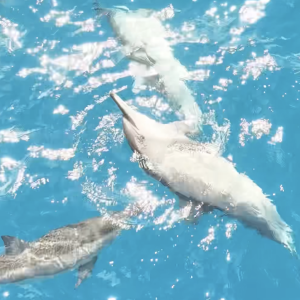
A pod of spinner dolphins swimming freely in the clear waters of Mauritius.
🐬 Did you know?
Spinner dolphins owe their name to their incredible ability to spin several times in the air before diving back into the water.
Why do dolphin excursions take place in the morning?
Although Mauritian regulations allow dolphin-watching activities until midday, most excursions take place during the morning.
After spending the night hunting offshore, dolphins return to calmer coastal waters to rest, socialise and care for their young. Heading out early also means calmer sea conditions and fewer boats around the animals.
Can you swim with dolphins?
Yes, but swimming with dolphins is strictly regulated in Mauritius.
Operators are expected to follow guidelines designed to minimise disturbance to the animals. These include respecting minimum approach distances, entering the water calmly under supervision, avoiding crossing the dolphins’ path and limiting the time spent with each group.
These practices help preserve the dolphins’ natural behaviour while allowing visitors to enjoy a respectful and unforgettable wildlife experience.
🌊 Did you know?
Dolphins live in highly organised social groups and communicate through whistles, clicks and body language.

Responsible dolphin encounters always allow the animals to decide
whether they approach or continue on their way.
Every encounter is unique
Dolphins are wild animals and completely free to choose where they go and how they behave. Some encounters are long and close, while others are shorter or more discreet.
This freedom is what makes every dolphin-watching experience so special and reminds us that we are simply visitors in their natural environment.
0 Comment